
Weak or uneven airflow
Blocked filters, a dirty coil, fan trouble or an obstruction can reduce airflow. The cause should be identified before parts are recommended.
Serving Cambridge, Waikato & surrounding areas
Mon–Fri 8am–6pm · Sat 9am–2pm
Heat pump service in Cambridge
Practical maintenance, accurate fault diagnosis and dependable repairs for better comfort and more consistent performance.
Reliable local servicing
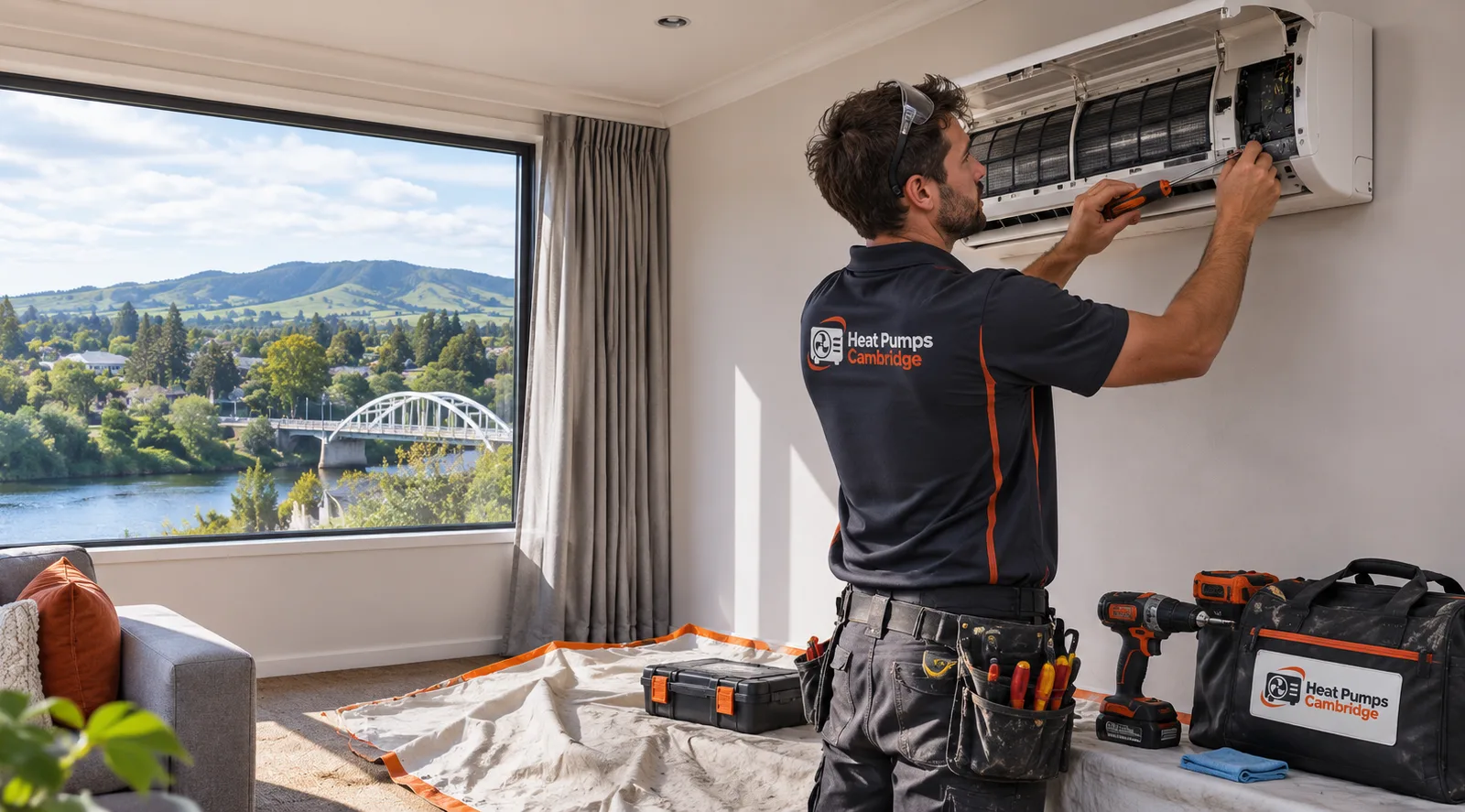
A professional heat pump service in Cambridge can resolve weak airflow, unusual noises, water leaks, poor temperature control and other performance problems. Heat Pumps Cambridge services residential and light commercial systems, with work based on the condition of the equipment rather than a one-size-fits-all checklist.
Cambridge experiences cool winter mornings and warm, humid periods in summer. A system that runs in both heating and cooling modes accumulates dust on filters and indoor coils, while leaves, grass and debris can restrict the outdoor unit. Regular inspection helps catch these issues before the unit has to work harder to maintain the selected temperature.
A service is also a good time to discuss recurring symptoms. Tell the technician when the fault occurs, which mode is selected and whether any indicator lights or error codes appear. Those details can shorten diagnosis and help distinguish a maintenance issue from a failed component.
Service scope
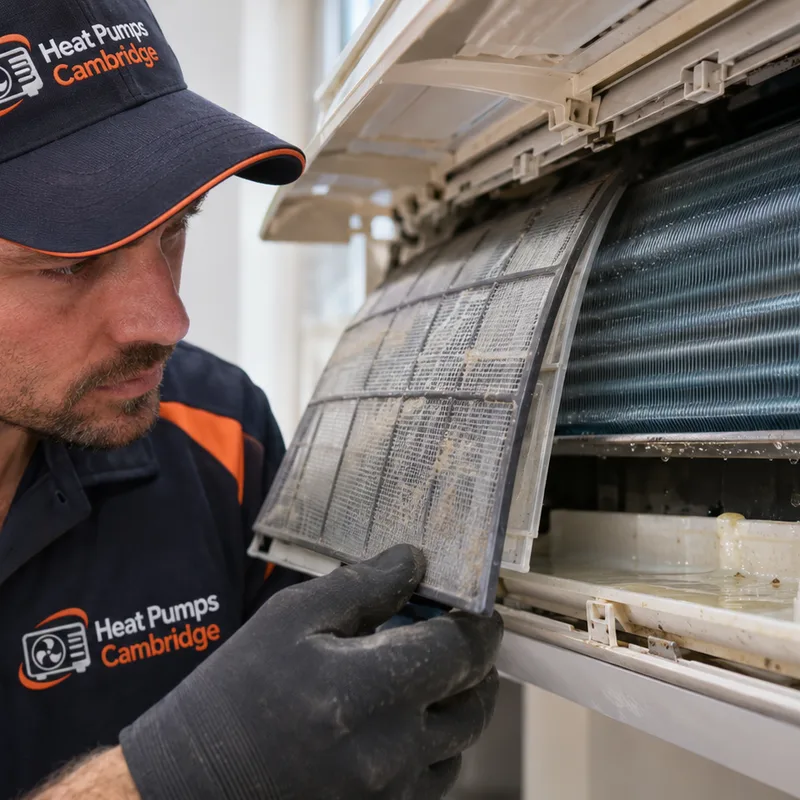
The scope depends on the system and its condition. A routine visit commonly includes cleaning or checking the return-air filters, inspecting the indoor coil and condensate tray, confirming that the drain can discharge correctly, and looking for signs of contamination or water tracking.
The outdoor unit should be checked for blocked airflow, damaged fins, loose electrical connections and debris around the coil. The technician can also run the system through its operating modes, listen for abnormal fan or compressor noise, assess the temperature response and inspect accessible pipework and insulation.
Refrigerant is not a consumable that should need regular topping up. If a system appears short of refrigerant, the underlying cause needs investigation. Simply adding refrigerant without considering a leak can leave the original fault unresolved. Electrical and refrigerant work should be completed only by a person authorised for that work.
Faults and symptoms
Blocked filters, a dirty coil, fan trouble or an obstruction can reduce airflow. The cause should be identified before parts are recommended.
Incorrect settings, restricted airflow, sensor faults and refrigeration problems can produce similar symptoms. Testing narrows down the actual fault.
A blocked drain, dirty tray, installation issue or damaged condensate component may allow water to escape. Prompt attention can limit damage to nearby finishes.
Rattles and buzzing can come from loose panels, fan components, debris or electrical parts. Grinding or persistent mechanical noise warrants inspection.
Dust and microbial growth can collect around filters, coils and drain components. Cleaning requirements depend on where the contamination is found.
Record the displayed code and avoid repeatedly resetting a unit that keeps stopping. Diagnostic checks can determine why its protection controls are operating.
Diagnosis to verification
We start with what you have noticed, when it began and whether it affects heating, cooling or both. The model details and any displayed fault code are useful.
The technician checks accessible indoor and outdoor components, airflow paths, drainage and visible electrical or pipework conditions. The exact tests depend on the reported fault.
The system is operated to assess its response, airflow, sound and controls. Diagnostic instruments may be used where a performance or component fault is suspected.
You receive a clear explanation of the condition found and the recommended work. If a repair requires parts or a broader scope, that can be discussed before proceeding.
Approved maintenance or repair work is completed, then the unit is run again where practical to confirm operation and check that the original symptom has been addressed.
Cambridge maintenance needs

Properties near Cambridge's rural edge can expose outdoor units to grass clippings, windblown dust and vegetation. Keeping plants and stored items clear of the cabinet helps the fan move air through the outdoor coil. The unit should remain securely mounted and its drain path should not be buried or obstructed.
Leafy established areas such as Leamington can require more frequent checks around outdoor equipment when leaves or garden debris collect nearby. In newer developments around Cambridge, access can be tight where units sit beside fences, paths or planted boundaries. Safe working room is important for cleaning, testing and future repairs.
Inside the property, filters often need attention between professional visits. Follow the manufacturer's cleaning instructions, switch the system off first and allow washable filters to dry fully before refitting them. Deeper coil, electrical, drainage and refrigeration work should be left to a technician.
Service pricing
A routine single-unit heat pump service in Cambridge typically costs about NZ$150 to NZ$250, while deeper cleaning, multi-unit work or fault diagnosis may cost more. Repairs are priced separately when parts, refrigerant work or extended testing are required.
Final cost depends on the system type, number of indoor units, access, contamination level, fault complexity and replacement parts. A straightforward wall-mounted split system usually takes less work than a multi-split or ducted system. The exact cost is confirmed once the unit and required scope have been assessed.
Signs to act on
Book an inspection when performance changes, rather than waiting for complete failure. Reduced airflow, slow temperature changes, new noises, repeated stopping, water near the indoor unit and persistent odours all justify attention. A rising electricity bill can have several causes, so it should not be treated as proof of a heat pump fault by itself.
Routine servicing is best planned around equipment use, the manufacturer's instructions and the environment around the unit. A home with pets, renovation dust or frequent daily operation may need filter and cleanliness checks sooner than a lightly used system. Commercial premises can also require a different schedule because occupancy and operating hours vary.
If the unit smells hot, repeatedly trips a circuit, shows damaged wiring or is affected by water near electrical components, switch it off and arrange professional assessment. For information about the team handling your enquiry, Heat Pumps Cambridge provides the local point of contact.
Addressing a developing fault early can reduce disruption and gives you a clear basis for deciding whether servicing or repair is appropriate.
Call for a Free EstimateUseful answers
The right interval depends on use, system type and the manufacturer's maintenance instructions. Filters should be checked regularly, while a professional service may be appropriate annually or when performance changes. Cambridge properties exposed to renovation dust, pets, roadside dust or garden debris may need more frequent cleaning checks.
A routine service of one accessible wall-mounted split system commonly takes around an hour, although condition and access can extend the visit. Multi-split and ducted systems take longer because they have more components, outlets or indoor units to inspect. Fault diagnosis may also require repeated testing.
Many common heat pump brands can be inspected and maintained, but repair options depend on the model, fault and availability of compatible parts. Supplying the brand and model number when booking helps identify the system. The model label is commonly located on the indoor or outdoor unit.
The decision should be based on the fault, repair cost, equipment condition, age and parts availability. A minor drain or fan issue may be economical to repair, while a major failure on an older unit may justify comparing replacement. An inspection provides the evidence needed to make that choice.
Brief periods of cooler airflow can occur during a normal defrost cycle, but persistent cool air needs investigation. Settings, dirty filters, restricted airflow, sensors, outdoor conditions or a refrigeration fault can all affect heating. Cambridge's cold, damp winter mornings can make defrost cycles more noticeable.
Clear access to the indoor unit, controller, switchboard and outdoor unit makes servicing safer and more efficient. Move furniture away from the indoor unit where practical, secure pets and remove stored items or vegetation that blocks the outdoor cabinet. Do not dismantle covers or electrical components.
A service can resolve some leaks caused by blocked or contaminated condensate components, but damaged parts or installation faults may require repair. Turn the unit off if water is reaching electrical fittings or damaging walls and floors. The drain, tray and unit position should be inspected before the system returns to normal use.
Arrange an inspection
Describe the system, its symptoms and any fault code you have seen. Heat Pumps Cambridge can assess the required service or repair and explain the next step.